Why I Stopped Chasing the Same Problem and Started Looking at the Whole Person
By Lisha Antiqua PhD, Founder of Your Own University and Creator of the Amazing YOU Method
I have spent years studying human behavior, trauma, identity, relationships, and the many ways people try to change their lives. And one of the most important things I've learned is how exhausting personal growth becomes when we keep approaching the same problem from different directions without understanding the person experiencing it.
Someone comes to you because they struggle with confidence. So you work on their confidence. You explore their beliefs, their childhood experiences, their fears, and the situations where they feel powerless. They begin making progress, but a few weeks later, the same struggle appears in their relationship. Then it shows up in their career. Then in their finances. Suddenly, you're working through what appears to be another problem, even though much of the underlying pattern is familiar.
I've seen how easily this happens. We address one symptom, then another, then another. We spend time revisiting experiences, searching for explanations, and trying different techniques to help someone move forward. Some of those approaches are useful and necessary. But I began questioning whether we were making the process harder than it needed to be.
What if we were spending so much time looking at the problem that we were overlooking the whole person?
When Everything Is Connected, Why Treat Everything Separately?
In my own life, I learned how closely my physical body, thoughts, emotions, energy, relationships, and sense of purpose influenced one another. I couldn't separate my confidence from my experiences of safety. I couldn't separate my relationships from the beliefs I'd developed about myself. And I couldn't separate my willingness to pursue my dreams from the survival patterns I'd learned along the way.
The more I studied and worked with people, the more I recognized these connections in their lives, too.
A person struggling to move forward professionally might describe a fear of failure. But their body might also respond to visibility as though they're facing danger. Their relationships might reinforce a need to please others. Their emotional habits might lead them to avoid disappointment. And their sense of purpose might have become tangled with the expectation that they must prove their worth.
If I focus exclusively on changing their thoughts about failure, I might miss the other influences keeping the pattern alive.
That realization changed how I approached coaching and education.
Why I Developed the Amazing YOU Method
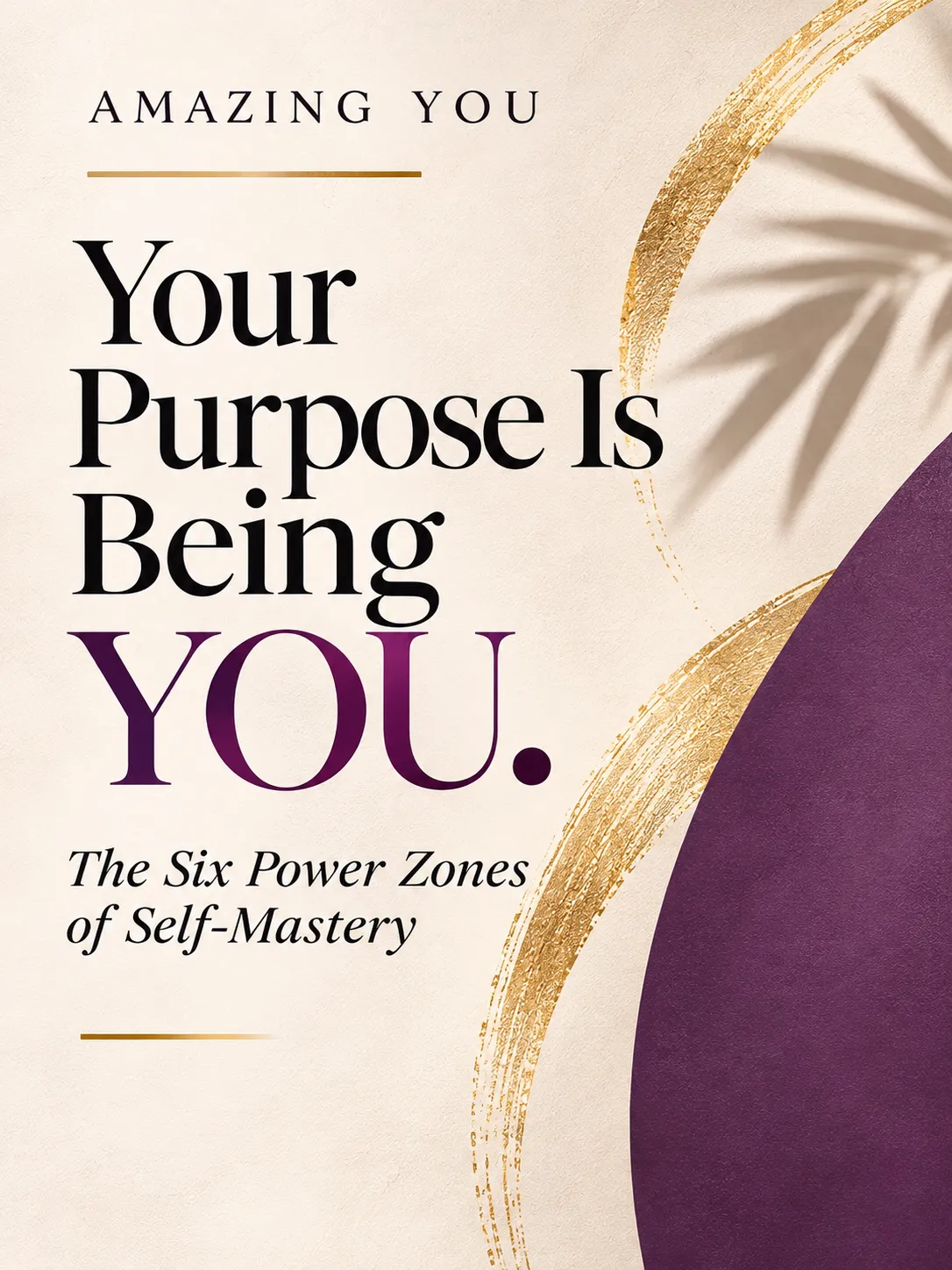
I began organizing my work around six interconnected areas of human experience, which became the six Power Zones of the Amazing YOU Method: Body, Mind, Emotions, Vibe/Etheric, Relationships, and Purpose.
Each Power Zone gives us another way to understand how someone experiences themselves and their world.
The Body Zone explores physical awareness, habits, and the ways stress influences our experience. The Mind Zone examines thoughts, beliefs, interpretations, and learned expectations. The Emotions Zone helps us understand our emotional responses and develop greater capacity to work with them.
The Vibe/Etheric Zone includes the energetic and spiritual dimensions of my professional framework, including how people experience their presence, boundaries, and connection to themselves. The Relationships Zone explores how we connect, communicate, establish boundaries, and participate in the lives of others. And the Purpose Zone asks how we choose to express who we are through our decisions, contributions, and daily lives.
These areas are interconnected. When we understand how they influence one another, we have a more complete picture of the person we're supporting. Sometimes a shift in one area changes how someone responds to a longstanding challenge in another. Instead of treating each difficulty as an isolated problem, we begin recognizing how a pattern operates across different parts of life and where the person has the greatest opportunity to change it.
Less Repeating the Story. More Transforming the Pattern.
One of my concerns about personal growth work is how often people feel they must repeatedly explain painful experiences to make progress. I've met people who have spent years understanding why they behave a certain way, yet still struggle to respond differently when the familiar situation returns. Understanding the origin of a pattern has value, but insight alone doesn't always change how someone lives.
There are times when discussing the past is meaningful, appropriate, and helpful. Trauma-focused psychotherapy, when indicated, has an important place in recovery, and coaching does not replace qualified mental health care. Yet I also believe practitioners need to examine whether repeatedly returning to painful material is serving the person or whether a different approach would help them apply what they've already learned.
This is where I see the power of coaching. We have the opportunity to help people recognize patterns in their present lives, develop new responses, practice different choices, and begin experiencing themselves differently. We don't always need another detailed account of what happened. Sometimes the more useful question is what the person is experiencing now, how the pattern influences their decisions, and what would support a different response.
A whole-person approach gives us more places to begin. We might explore what happens in someone's body when they face a difficult decision, examine a belief about earning love, or recognize how a relationship reinforces an old expectation. We might begin with their sense of purpose and work backward to understand why taking action feels difficult. The starting point depends on the individual, their needs, and the work we're qualified to provide.
In my experience, looking at these connections has helped people recognize familiar patterns sooner and spend less time circling the same issue. The goal is to support meaningful transformation without unnecessary repetition of painful stories. That means respecting each person's pace, recognizing when specialized care is needed, and giving people an active role in deciding how they move forward.
The Power of Coaching the Whole Person
When I talk about practitioners, I'm speaking to a broad community. I work with therapists who want to incorporate a more holistic perspective into their existing professional practice, new coaches learning how to support people responsibly, experienced coaches refining their methods, and specialists whose work focuses on particular aspects of human experience. That might include a yoga teacher, relationship coach, energy practitioner, educator, or someone whose expertise centers on the body, emotions, mindset, or spiritual development.
Each brings valuable knowledge to the work. Specialization helps us develop depth, but it also creates a responsibility to recognize the limits of our perspective. A relationship coach doesn't need to become a nutrition professional, and a yoga teacher doesn't need to become a trauma therapist. They do benefit from understanding how the area they specialize in interacts with other aspects of a person's life, when to collaborate, and when a referral is appropriate.
This is one reason I believe holistic coaching education matters. When practitioners learn to recognize the connections between different aspects of human experience, they have more informed choices about how to support the person in front of them. They become less dependent on applying the same technique to every situation and more attentive to what the individual needs.
I developed the Amazing YOU Method to provide a structure for this kind of understanding. The six Power Zones help practitioners organize what they're observing, ask more useful questions, and support clients in translating awareness into action. My intention has always been to make personal growth more accessible, more respectful of the individual, and less dependent on repeatedly processing the same experience without meaningful change.
Your Purpose Is Being YOU
There is another reason I care so deeply about this approach. I don't believe people are projects waiting to be completed, and I don't believe the purpose of coaching is to turn someone into an ideal version of themselves according to somebody else's standards. I've spent enough of my own life trying to prove my worth, push through fear, and meet expectations to understand how exhausting that pursuit becomes. My work has taught me to pay closer attention to the person beneath those expectations and the choices available to them now.
When someone begins recognizing how their body, thoughts, emotions, energy, relationships, and purpose influence one another, they have an opportunity to approach their life with greater awareness. They begin seeing where old patterns are affecting present decisions, where they have been giving away authority, and where different choices might create a more satisfying experience. This doesn't require pretending the past never happened or expecting every difficulty to disappear. It means helping someone participate more fully in the life they're living today.
This is why Purpose is the sixth Power Zone of the Amazing YOU Method. I believe your purpose is being YOU, and your choices are how you express that purpose in the world. For practitioners, this philosophy changes the way we approach our work. Rather than measuring success only by the disappearance of a particular problem, we also consider whether the person is developing greater awareness, personal authority, and the ability to make meaningful choices in their everyday life.
A Different Way to Help People Grow
When I founded Your Own University, I wanted to create a place where people could learn about themselves as whole human beings and where coaches, teachers, and practitioners could develop a more comprehensive understanding of the people they serve. I wanted education that respected lived experience, personal choice, spiritual exploration, and the relationships between different aspects of life. I also wanted practitioners to understand that effective support involves knowing when to guide, when to listen, when to collaborate, and when someone's needs fall outside our professional scope.
The Amazing YOU Method grew from that vision, and it continues to shape the way I teach holistic coaching today. My hope is that practitioners will spend less time chasing isolated problems and more time helping people recognize and transform the patterns influencing their lives. I want clients to experience progress through understanding, practical application, and choices they feel empowered to make, rather than believing they must continually revisit everything painful about their past before moving forward.
Whether you're beginning your own personal growth journey or developing your work as a coach, teacher, therapist, or holistic practitioner, I invite you to explore where you are in your development and what kind of contribution you're ready to make. Your next step might involve reclaiming your own direction, learning how to guide others, or expanding work you've already begun. Understanding where you are helps you make more intentional decisions about the education, support, and opportunities worth pursuing.
If you're ready to explore your next chapter, take the Soul Purpose Quiz to explore whether you're in your Rebuilder, Messenger, or Architect stage. Use your results to consider what comes next, so you spend less time questioning your direction and more time stepping fully into your purpose.
With love,
Lisha Antiqua PhD
Founder, Your Own University
Creator, the Amazing YOU Method